
Thursday, April 2, 2009

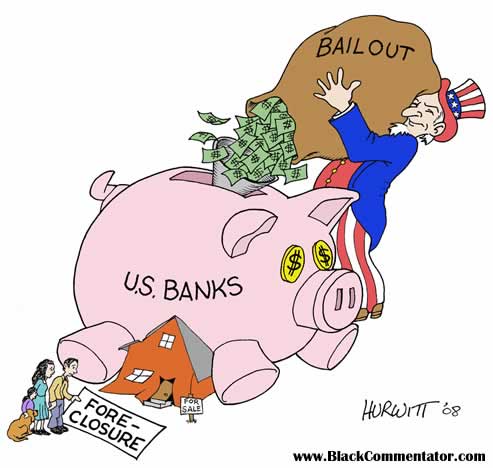
So the question is.....is this the bottom? A hint of optimism is in the air as the market rises 20% over the past two weeks. It's contagious but again, is this the bottom? The doomsayers say no.
In Victoria, we are watching the housing market closely to see how it reacts. House sales have increased over the past couple of months which is a good sign. Canada's banking system is strong and our Prime Minister has been bragging about it in London at the Summit.
Let's hope that we have hit the bottom and the optimism stays...only the future will tell.
Krista and Sherri
www.lawlessbrown.com
In Victoria, we are watching the housing market closely to see how it reacts. House sales have increased over the past couple of months which is a good sign. Canada's banking system is strong and our Prime Minister has been bragging about it in London at the Summit.
Let's hope that we have hit the bottom and the optimism stays...only the future will tell.
Krista and Sherri
www.lawlessbrown.com
Monday, February 23, 2009
Refinancing Victoria BC
If today's interest rates are 3/4% lower than your current interest rate, it may be a good time to re-evaluate your home mortgage. With Prime Rate at 3% the opportunity to free up extra money in your monthly budget by refinancing your home and consolidating outstanding loans is excellent.
by refinancing your existing home loan and accessing the additional equity value you caould lower your current monthly payment by conveniently consolidating outstanding debts. You could also give yourself extra financial breathing room in your monthly budget by eliminateing a second mortgage or car loan pamyent.
It's an easy way to use the equity in your home to get out of debt faster.
Let us help you de-stress in these tough economical times. Check out the special Refinancing Issue of our newsletter (February) You can sign up for free on our website.
Krista and Sherri
www.lawlessbrown.com
by refinancing your existing home loan and accessing the additional equity value you caould lower your current monthly payment by conveniently consolidating outstanding debts. You could also give yourself extra financial breathing room in your monthly budget by eliminateing a second mortgage or car loan pamyent.
It's an easy way to use the equity in your home to get out of debt faster.
Let us help you de-stress in these tough economical times. Check out the special Refinancing Issue of our newsletter (February) You can sign up for free on our website.
Krista and Sherri
www.lawlessbrown.com
Sunday, February 8, 2009
Victoria BC - Buyer's Market
http://photoshare.shaw.ca/messages/viewshow/12871972022-1233709284-84777/gallery/page/
The above is a great link to charts and graphs put out by the VREB. If you are more of a visual learner, these are perfect. Prices are down and it is a Buyer's Market!!
Call us
Krista and Sherri
www.lawlessbrown.com
The above is a great link to charts and graphs put out by the VREB. If you are more of a visual learner, these are perfect. Prices are down and it is a Buyer's Market!!
Call us
Krista and Sherri
www.lawlessbrown.com
Thursday, January 22, 2009
Bank of Canada sees return to economic growth later in 2009
Last Updated: Thursday, January 22, 2009 | 11:54 AM ET
CBC News
 Bank of Canada governor Mark Carney speaks at an Ottawa news conference Thursday. (CBC)
The Bank of Canada is projecting a sharp recession that will see three quarters of economic contraction before growth returns in the second half of 2009.
In its update to its Monetary Policy Report, the central bank said it anticipates quarter-over-quarter contractions of 2.3 per cent in the fourth quarter of 2008, followed by a deeper drop of 4.8 per cent for the first three months of 2009 and a drop of one per cent in second quarter of this year.
However, the bank sees a rebound to positive activity by the third quarter of the year, when it forecasts two per cent growth and 3.5 per cent expansion in the last three months of the year.
The bank said the return of normal financial conditions, coupled with the stimulus coming from monetary and fiscal policies, should boost the growth of consumer spending in 2010, leading to growth for the year of 3.8 per cent. The recent depreciation in the Canadian dollar will also lend support to a recovery, it added.
"Excess supply will be gradually reduced, with the economy projected to return to balance by mid-2011," the bank said. "The projected return to balance of the Canadian economy is faster than either of the recoveries following the 1981-82 and 1990-92 recessions."
Bank of Canada governor Mark Carney said the recovery projected by the bank is milder than from an average recession due to "muted" recoveries expected in other economies around the world.
"We are comfortable with our forecast," he told reporters at a news conference in Ottawa.
The latest outlook offered by the central bank marked a significant downgrade from the forecast it presented in October, when the bank projected growth of 0.6 per cent in 2009, and 3.4 per cent in 2010.
Two days earlier, the bank cut a key lending rate by half a percentage point to one per cent as it sought to boost the economy. Since it began its latest round of monetary policy easing in December 2007, the Bank of Canada has cut 3.5 percentage points from the key lending rate.
Enjoy
Krista and Sherri
Smith Manoeuvre
Couple abused tax laws
Homeowners tried to make mortgage deductible
Janice Tibbetts, Canwest News ServiceHomeowners tried to make mortgage deductible
Published: Friday, January 09, 2009
A Toronto couple who attempted a complicated manoeuvre to effectively make the mortgage on their home tax-deductible abused federal income-tax laws, the Supreme Court of Canada ruled yesterday.
"It has long been a principle of tax law that taxpayers may order their affairs so as to minimize the amount of tax payable," Justice Louis LeBel wrote for the 4-3 majority. "However, this principle has never been absolute."
The split decision is a defeat for Earl and Jordanna Lipson, a Toronto couple who swapped non-deductible interest for deductible interest while buying their $750,000 home in 1994.
The scheme involved paying down their mortgage immediately after obtaining it, then using the repaid principal as collateral for an investment loan, which is tax deductible under the Income Tax Act.
The federal tax collector went after Earl Lipson, who then took his fight to the Tax Court of Canada.
A judge ruled that the Lipson transactions did not technically break the law, but that the scheme "was an obvious example of tax avoidance" because it was clearly intended to make the mortgage interest tax-deductible.
The court's conclusion that the purpose of the transaction should be taken into account in deciding its legality was later upheld by the Federal Court of Appeal.
The case, which is a test of the legal limits of tax avoidance, has drawn enormous attention among tax advisers and the Supreme Court chamber was packed last April when the appeal was heard.
Toronto tax expert Jamie Golombek said that manoeuvring to make mortgage interest tax-deductible has become increasingly commonplace in Canada but "a cloud has been hanging over this technique" for the past couple of years in light of the Lipson court battle.
A central issue in the case is the interpretation of an Income Tax Act principle, called the General Anti-Avoidance Rule. Enacted in 1988 to reduce abusive tax avoidance, the GAAR can make legal transactions illegal for being a "misuse or abuse" of the rules.
Writing in dissent, Justice Ian Binnie described the GAAR as "a weapon that, unless contained by the jurisprudence, could have a widespread, serious and unpredictable effect on legitimate tax planning."
For more information, contact us,
Krista and Sherri
www.lawlessbrown.com
January 20, 2009
BANK OF CANADA LOWERS OVERNIGHT RATE TO 1.00%
TD Bank Financial Group
Recent economic data clearly show a Canadian
economy tilting into recession in the fourth quarter of last
year, a full year after the start of the U.S. recession. Against
this backdrop of continually souring economic news that is
unlikely to improve anytime soon, it came as no surprise
that the Bank of Canada (BoC) lowered its policy interest
rate yet again. The only issue worth debating prior to this
decision was with regards to the extent of easing. On that
front, the BoC’s decision to lower the overnight rate by 50
basis points (bps) was largely in line with market expectations
and those of private-sector forecasters, including TD
Economics.
In the communiqué accompanying today’s decision, the
BoC notes that since its last decision to slash the overnight
rate by 75bps on December 9th, “the outlook for the global
economy has deteriorated […], with the intensifying financial
crisis spilling over into real economic activity”. It
also cites weakened business and consumer confidence
worldwide and the resulting erosion of domestic demand.
On the plus side, there is mention that the extraordinary
policy actions from governments and central banks “are
starting to gain traction, although it will take some time for
financial conditions to normalize.” All said, the BoC expects
Canadian real GDP to contract by 1.2% this year,
which is close to our early December expectation for a
1.4% contraction. The BoC’s outlook for real GDP growth
of 3.8% in 2010 is, however, significantly ahead of our
more cautious call of 2.4% growth. The BoC’s latest forecasts
will be detailed on Thursday in its Monetary Policy
Report Update.
As for the inflation outlook, the BoC expects core inflation,
which stood at 2.4% as at November, to ease and
bottom at 1.1% in the fourth quarter. Total (all-items) inflation
is expected to dip into negative territory for the first
two quarters of this year as a result of falling energy prices.
Both measures of inflation are expected to converge back
up to the 2.0% target rate in the first half of 2011.
As the policy interest rate nears closer to an absolute
bottom of zero, the BoC is understandably eliminating explicit
references to the need for further easing, coaxing the
markets towards the end of this aggressive easing cycle –
a cumulative 350bps since December 2007. However, consistent
with their tone prior to today’s decision, the BoC is
leaving the door open to further easing. We expect a further
50bps reduction, down to a floor of 0.50%, at the next
decision, slated for March 3. Furthermore, given the considerable
amount of remaining uncertainty and the fact that
the Canadian recession has just started, the policy rate is
expected to stay at this record low well into 2010 before
inflation starts registering on the radar again
Pascal Gauthier, Economist
416-944-5730
Respectfully,
Krista and Sherri
www.lawlessbrown.com
BANK OF CANADA LOWERS OVERNIGHT RATE TO 1.00%
TD Bank Financial Group
Recent economic data clearly show a Canadian
economy tilting into recession in the fourth quarter of last
year, a full year after the start of the U.S. recession. Against
this backdrop of continually souring economic news that is
unlikely to improve anytime soon, it came as no surprise
that the Bank of Canada (BoC) lowered its policy interest
rate yet again. The only issue worth debating prior to this
decision was with regards to the extent of easing. On that
front, the BoC’s decision to lower the overnight rate by 50
basis points (bps) was largely in line with market expectations
and those of private-sector forecasters, including TD
Economics.
In the communiqué accompanying today’s decision, the
BoC notes that since its last decision to slash the overnight
rate by 75bps on December 9th, “the outlook for the global
economy has deteriorated […], with the intensifying financial
crisis spilling over into real economic activity”. It
also cites weakened business and consumer confidence
worldwide and the resulting erosion of domestic demand.
On the plus side, there is mention that the extraordinary
policy actions from governments and central banks “are
starting to gain traction, although it will take some time for
financial conditions to normalize.” All said, the BoC expects
Canadian real GDP to contract by 1.2% this year,
which is close to our early December expectation for a
1.4% contraction. The BoC’s outlook for real GDP growth
of 3.8% in 2010 is, however, significantly ahead of our
more cautious call of 2.4% growth. The BoC’s latest forecasts
will be detailed on Thursday in its Monetary Policy
Report Update.
As for the inflation outlook, the BoC expects core inflation,
which stood at 2.4% as at November, to ease and
bottom at 1.1% in the fourth quarter. Total (all-items) inflation
is expected to dip into negative territory for the first
two quarters of this year as a result of falling energy prices.
Both measures of inflation are expected to converge back
up to the 2.0% target rate in the first half of 2011.
As the policy interest rate nears closer to an absolute
bottom of zero, the BoC is understandably eliminating explicit
references to the need for further easing, coaxing the
markets towards the end of this aggressive easing cycle –
a cumulative 350bps since December 2007. However, consistent
with their tone prior to today’s decision, the BoC is
leaving the door open to further easing. We expect a further
50bps reduction, down to a floor of 0.50%, at the next
decision, slated for March 3. Furthermore, given the considerable
amount of remaining uncertainty and the fact that
the Canadian recession has just started, the policy rate is
expected to stay at this record low well into 2010 before
inflation starts registering on the radar again
Pascal Gauthier, Economist
416-944-5730
Respectfully,
Krista and Sherri
www.lawlessbrown.com
Subscribe to:
Posts (Atom)